

When the hysteria dies down, think carefully: Is the proposed breakaway European Super League (ESL) such a terrible idea? Most of the football clubs involved struggle to break even and most are rescued out of a financial mess by a yearly gift from their owners-cum-benefactors.

Self-annihilation is a constituent part of many celebrity careers. While some actors or singers slide smoothly from one success to another, hardly pausing for the occasional misadventure, others are ruined, occasionally by others but much more usually by their own devices.

At the beginning of February, the Biden administration made two relevant decisions on Yemen with far-reaching consequences for the country and US policy in the Arabian Peninsula. The first announcement concerned the end of US support for “offensive operations” conducted by the Saudi-led coalition in Yemen, a campaign promise President Joe Biden followed through. The US will suspend all pending arms deals with the countries intervening in the Yemeni Civil War. These notably include the sale of $500 million worth of precision-guided missiles to Saudi Arabia and the purchase of 50 F-35 fighter jets by the United Arab Emirates agreed under the Trump administration. In addition, the US Department of Defense announced a cessation of intelligence sharing related to military targets inside Yemen.

The debate is raging once again about the true origin of COVID-19. Was it zoonotic, originating in a bat cave and then infecting exotic meat in Wuhan’s wet market as the majority of scientists claimed throughout 2020? At the approach of the November election, US President Donald Trump preferred to believe the pandemic was a plot to destroy his presidency conducted by a man he previously called an intimate “friend,” China’s President Xi Jinping. The virus was already spreading when Trump explained to World Economic Forum in Davos the nature of his relationship with Xi: “He’s for China, I’m for the US, but other than that, we love each other.”

One insidious way to torture the detainees at Guantanamo Bay was to blast music at them at all hours. The mixtape, which included everything from Metallica to the Meow Mix jingle, was intended to disorient the captives and impress upon them the futility of resistance. It worked: This soundtrack from hell did indeed break several inmates.

In late December 2020, it was announced that Switzerland would start its COVID-19 vaccination campaign. Eligible persons were asked to make an appointment. Those of a particular age with certain health risks — such as diabetes, high blood pressure and allergies — were encouraged to register.
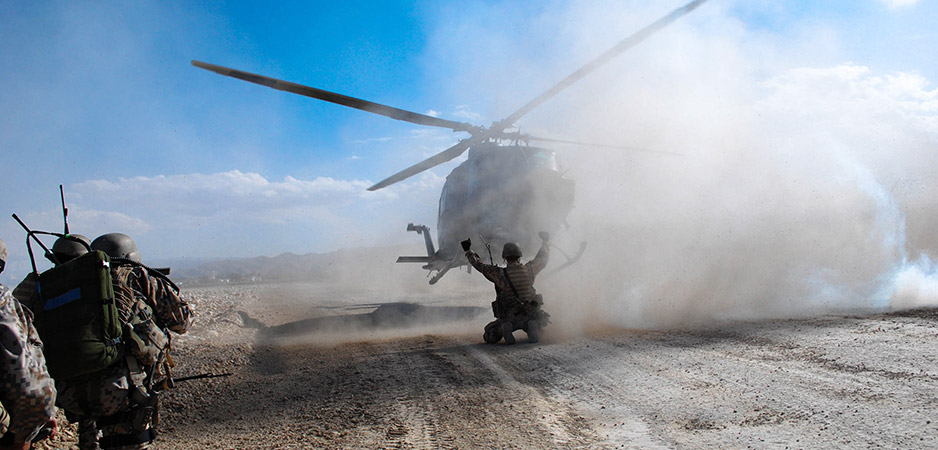
The banner headline on the front page of Wednesday’s New York Times contained what can be interpreted as either a promise, a prophecy, a wild hope or a meaningless truism. It read: “Withdrawal of U.S. Troops in Afghanistan Will End Longest American War.” The headline linked to an article with a slightly less assertive title: “Biden to Withdraw All Combat Troops From Afghanistan by Sept. 11.” Nevertheless, it quickly returned to the prophetic tone, while adding one significant dramatic detail: “President Biden will withdraw American combat troops from Afghanistan by Sept. 11, declaring an end to the nation’s longest war and overruling warnings from his military advisers.” Instead of the traditional tactic of divide and rule, Biden will be applying a new one: withdraw and overrule.

Burma, as Myanmar was known then, won its independence from the British in 1948. Since then, bilateral relations between the US and Myanmar can at best be described as lackluster. They have lacked what experts would call “strategic compulsions.” Western allies of the US lack strategic calculus in dealing with Myanmar. They have viewed it from the narrow prism of moralistic Western standards of democracy, human rights, rule of law, corruption and the trafficking of humans, drugs and weapons.

Sports governance worldwide has had its legs knocked out from under it. Yet national and international sports administrators are slow in realizing the magnitude of what has hit them. Tectonic plates underlying the guiding principle that sports and politics are unrelated have shifted, driven by a struggle against racism and a quest for human rights and social justice.

Since people invented writing, communications technology has become steadily more high-bandwidth, pervasive and persuasive, taking a commensurate toll on human attention and cognition. In that bandwidth war between machines and humans, the machines’ latest weapon is a class of statistical algorithm dubbed “deep AI.” This computational engine already, at a stroke, conquered both humankind’s most cherished mind-game (Go) and our unconscious spending decisions (online).