

It is inarguable that cuteness matters in campaigns focused on animal protection and conservation. Feeling a connection to a species engenders compassion and the desire to see its continuity, and even moves us to engage in programs focused on its survival. Although beauty is in the eye of the beholder, not all animals exhibit the same level of objective adorability. It is with this sentiment in mind that the World Animal Protection aptly framed its “Ugly Animals Need Love Too” campaign.
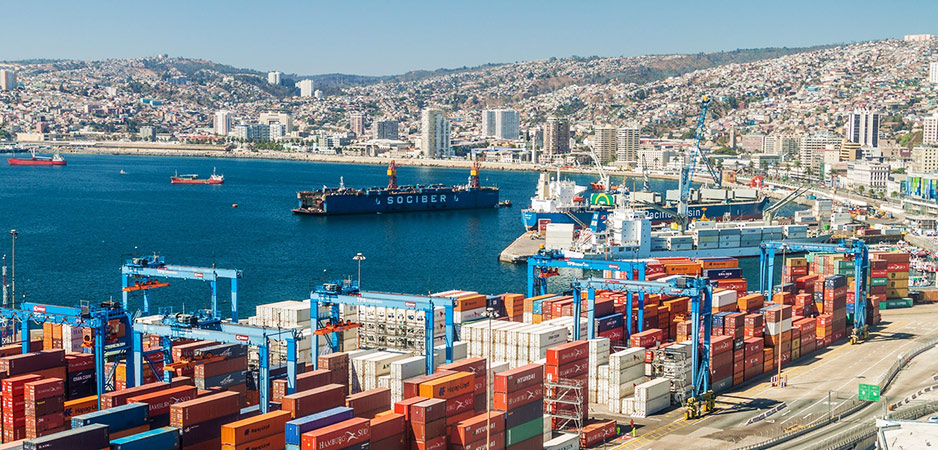
On April 28, 2011, an economic integration initiative involving Chile, Colombia, Mexico and Peru was announced following a forum held in Lima to discuss deeper regional integration. The Declaration of Lima saw the four countries commit themselves to deepening ties, with particular emphasis on improving engagement with the Asian Pacific region. But a decade on, what has the Pacific Alliance accomplished, and what can be expected from it in the future?

With an estimated 255 million full-time jobs lost in 2020, the global economy shrank by 4.4%, pushing ever more people into poverty. Right now, 34 million are on the brink of starvation, and 235 million will require humanitarian assistance and protection in 2021 — an increase of 40% from last year. Limited social and economic mobility has deeply altered family life with alarming speed and magnitude. For families, the fundamental building blocks of our society, the pandemic is a public and yet a very personal crisis. As the raging socioeconomic inequalities we have allowed to multiply are exposed, their severe strain continues to be experienced differently among families.

On May 6, The Daily Devil’s Dictionary dared to express surprise at the latest example of Russia-related fearmongering by the respectable corporate media. When Christopher Miller, who had recently risen to fame as acting defense secretary in the waning months of Donald Trump’s presidency, claimed to have unearthed an “act of war” attributable to Russia, the media jumped on the occasion. Miller was referring to the dormant “Havana Syndrome” dossier and accusing Russia of conducting direct-energy attacks against Americans in various places across the globe.

American media usually report on Israeli military assaults in the Occupied Palestinian Territories and Gaza as if the US is an innocent, neutral party to the conflict. In fact, a majority of Americans have told pollsters for decades that they want the United States to be neutral in the Israeli-Palestinian conflict.
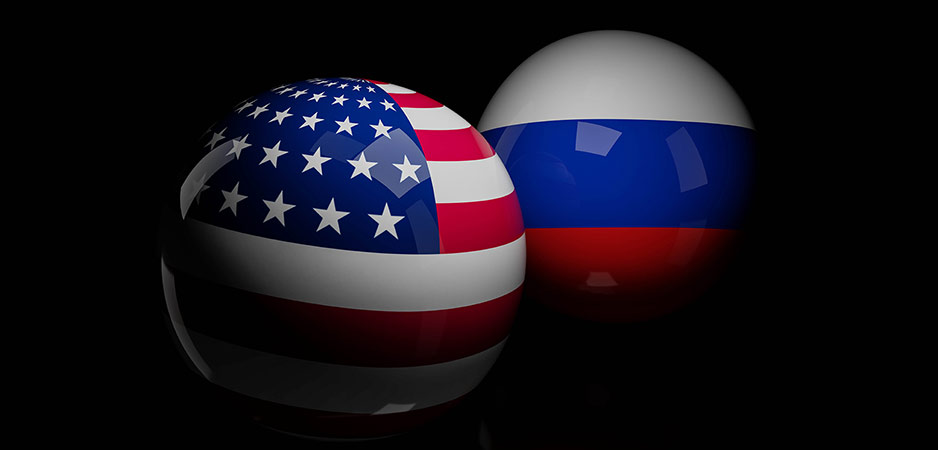
The Biden administration is posing some stark choices for its European allies. It is not only challenging them to stand more firmly against the Kremlin, but is expanding America’s expectations of what democracy should be inside their own countries. President Joe Biden’s tough position on Russia, especially the sanctions announced on April 15, risks further exacerbating the split within NATO countries over how tough to be on the Kremlin. The administration also risks blowback from Central and East European (CEE) states over its strong support for liberal democratic standards that not all of them endorse.

Earlier this week, an Israeli military official evoked “a worst-case scenario” conducted by three Israeli infantry brigades that would amount to crushing Gaza on the ground rather than just bombarding it. Some observers have noticed that the current worse-than-ever-before-but-not-as-bad-as-what’s-to-come scenario has miraculously permitted Benjamin Netanyahu, the Israeli prime minister, to hang on to power after the March 23 election deprived him of the hope of heading a new coalition.
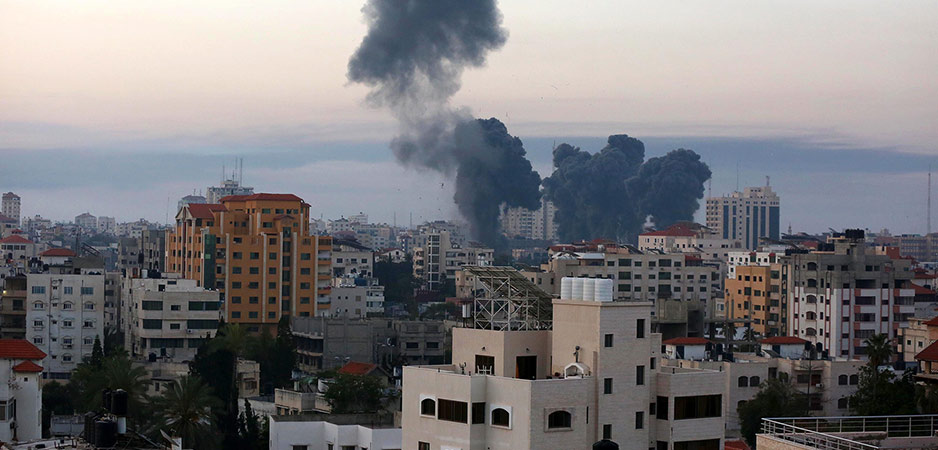
The deepening Israeli-Palestinian conflict is quickly becoming a game of identifying which acts committed by either side in the course of the most recent fighting are war crimes and which are crimes against humanity. The failure on the part of both international institutions and powerful nations to provide even a minimum of perspective that might lead toward a satisfying resolution has become manifest. In today’s geopolitical hyperreality, perspective has become a luxury that politicians are not even allowed to consider.
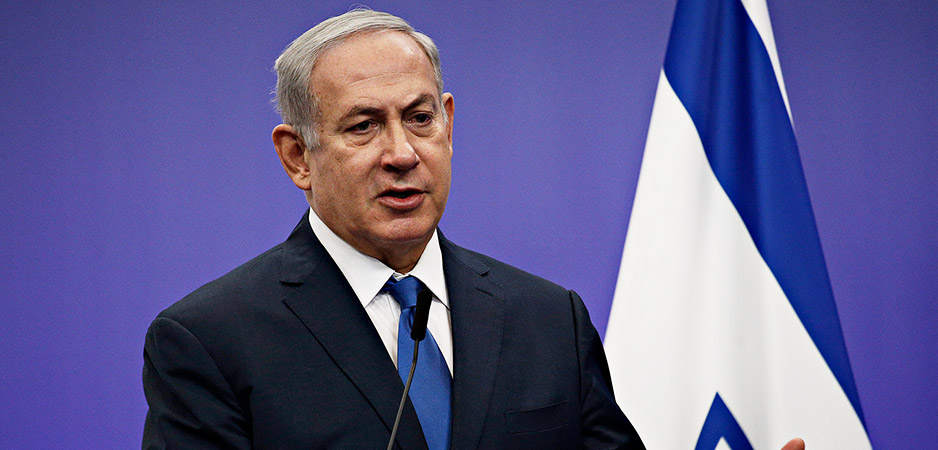
In March, Israeli Prime Minister Netanyahu was unable to achieve a parliamentary majority in the Knesset after a fourth Israeli election in two years. As a result, he needed a national crisis to prevent the establishment of an alternative government by the opposition. Such a coalition would include right, centrist and left-wing parties, presenting a threat to Netanyahu’s premiership.
In February, Mohammed bin Salman announced an overhaul of the Saudi judicial system with plans to bring in four new laws: the personal status law, the civil transactions law, the penal code of discretionary sanctions and the law of evidence. The crown prince was quoted as saying that “The new laws represent a new wave of reforms that will … increase the reliability of procedures and oversight mechanisms as cornerstones in achieving the principles of justice, clarifying the lines of accountability.”