

In just over a month, India has gone from boasting about its vaccine distribution to becoming the global epicenter of the COVID-19 pandemic. As this author explained in a previous article, many have questioned whether India’s vaccine diplomacy was a bold masterstroke or an unwise distraction.

Here’s the strange thing in an ever-stranger world: I was born in July 1944 in the midst of a devastating world war. That war ended in August 1945 with the atomic obliteration of two Japanese cities, Hiroshima and Nagasaki, by the most devastating bombs in history up to that moment, given the sweet code names “Little Boy” and “Fat Man.”

Visibly weakened following a hunger strike in prison yet full of his usual verve, Alexei Navalny appeared before a court via videoconference on April 29 to appeal his fine for the defamation of a World War II veteran just as branches of his Anti-Corruption Foundation (FBK) were being shuttered across Russia. This is but the latest installment of the Kremlin’s campaign to increase pressure on Russia’s civil society and opposition.
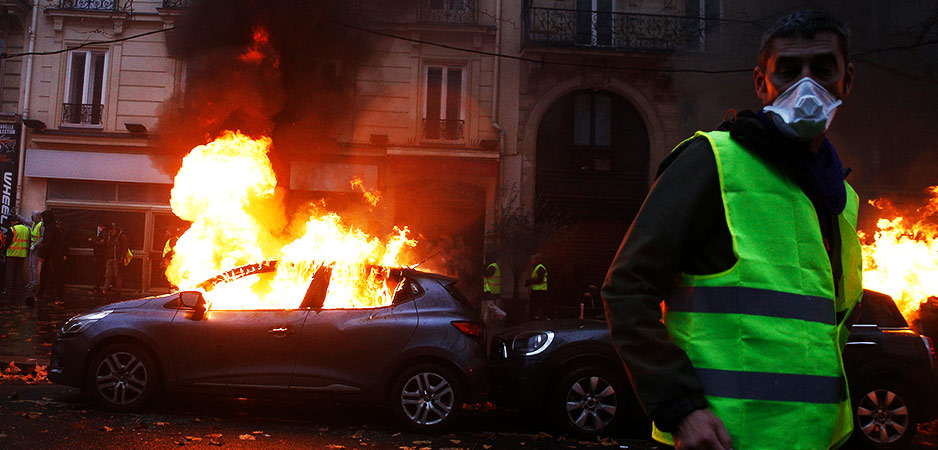
In just 12 months, French voters will be invited to judge Emmanuel Macron’s five years in office as president of the Fifth Republic. Most pundits in the media lazily assume it will boil down to a second-round repeat of the 2017 contest: Macron versus the right-wing firebrand, Marine Le Pen. Macron has the theoretical advantage of being the incumbent, but Le Pen has the practical advantage of challenging this largely unconvincing office-bearer. The French are seriously disappointed with Macron’s politics, much as they were with the two previous one-term presidents, Nicolas Sarkozy and François Hollande.

The political faction of the Catholic Church known as the US Conference of Catholic Bishops (USCCB) is facing a major problem. Though it was never meant to play a political role, for historical reasons, it has allowed itself to do what all individual Americans find themselves compelled to do: choose a side. It has fallen into one of the two cultural-political grooves Americans are expected to follow and identify within a binary world of opposition between liberals and conservatives, Democrats and Republicans.

America has a serious infrastructure problem. Maybe when I say that what comes to mind are all the potholes on your street. Or the dismal state of public transportation in your city. Or crumbling bridges all over the country. But that’s so 20th century of you.
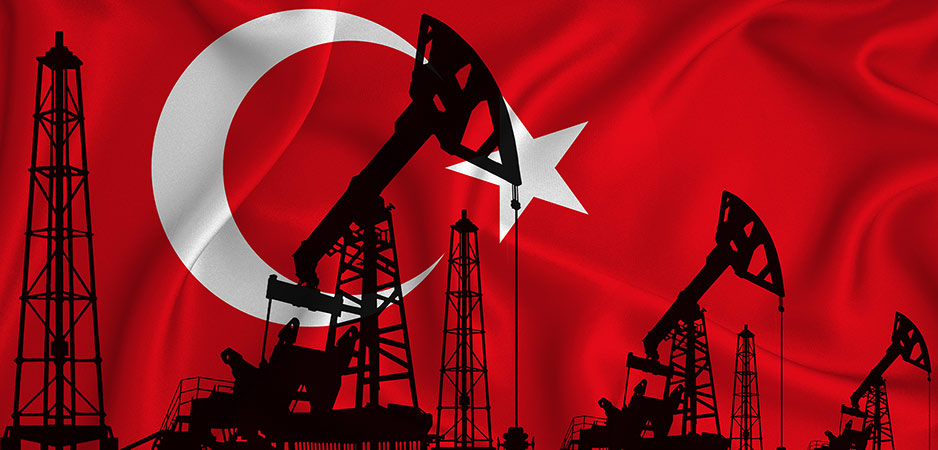
In recent months, the United Arab Emirates has adopted a number of stances inimical to Turkish ambitions in the Mediterranean. This has taken the form of closer relations between the UAE, Greece and Greek Cyprus, more joint military exercises, and increased energy collaboration with Israel via the Abraham Accords. But with President Joe Biden in the Oval Office, the UAE has toned down its overt military posturing and complemented its strategy with economic means. The shift relies on hydrocarbon pipeline proposals that exclude Turkey with the aim to diminish its geopolitical importance to Europe.

One inevitable consequence of the rise of the consumer society and the ever more sophisticated technology it requires to survive and expand is the progressive replacement of every aspect of natural human culture by consumable simulacra. When the process involves linking the increasing variety of simulacra together into the semblance of a coherent whole that can be treated as a system, the result is hyperreality. The scientist Alfred Korzybski remarked that “the map is not the territory.” Hyperreality exists as a kind of map that so completely covers the territory that it finds a way of replacing all its original features.
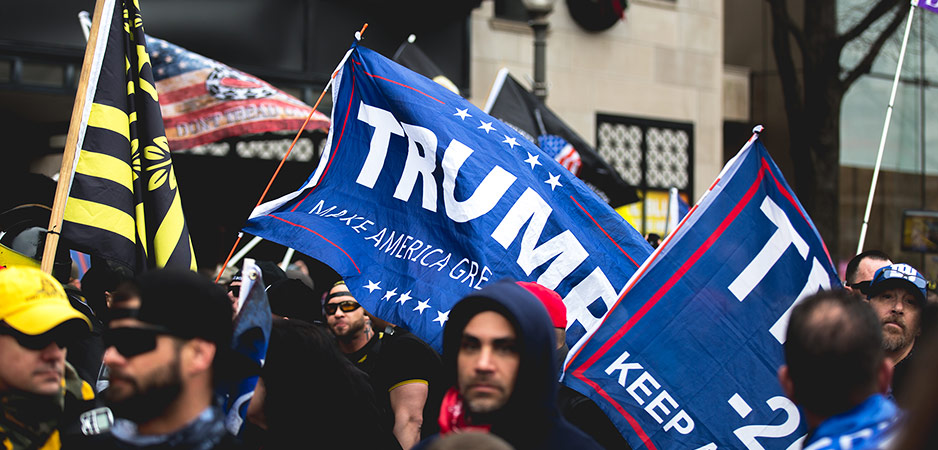
The nationalist plank of radical-right, populist ideology asserts that the US is — and always will be — the overriding dominant world power on every measure. Yet such a belief flies in the face of the laws of history, a population ecology view of nation-states and power relations, and the life-cycle model that has applied to every empire and hegemonic state.

After a year of enduring barriers imposed by the pandemic, scientists have good reason to welcome the Biden administration’s first budget request, which includes significant increases in funding for technology and innovation. Scientific progress requires this investment — indeed, it requires investment in the entire spectrum of discovery. We need use-inspired research, applied research and research that can turn abstract results into concrete solutions.