
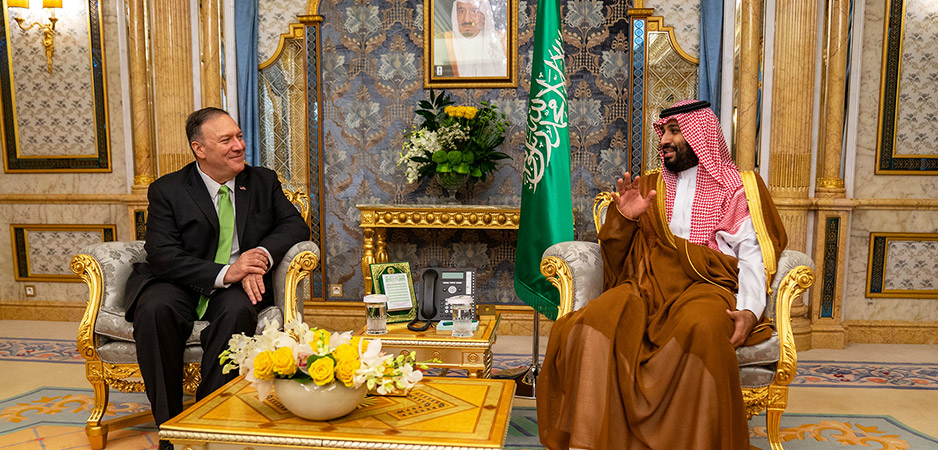
On April 10, the Saudi Ministry of Defense announced the execution of three soldiers after what it called a “fair trial” in a specialist court. The men were convicted and sentenced to death for the crimes of “high treason” and “cooperating with the enemy.” Aside from the men’s names, no further details were provided.
On April 14, a Turkish military base in Bashiqa, some 20 kilometers northeast of Mosul in northern Iraq, was a target of a missile strike that killed a Turkish soldier. The attack happened on the same day that an explosives-laden drone targeted Erbil International Airport in the Kurdistan Region of Iraq (KRI). The drone strike was claimed by an Iranian-backed Iraqi Shia militia, Saraya Awliya al-Dam, which is known to have close ties with Kataib Sayyid al-Shuhada and Kataib Hezbollah militias that are part of Hashd al-Shaabi — an Iranian-backed Iraqi militia umbrella group also known as the Popular Mobilization Forces (PMF).

The news from India concerning the ravages of COVID-19 is now beyond alarming. New York Times correspondent Jeffrey Gettleman describes a nation stricken by “the fear of living amid a disease spreading at such scale and speed.” In what sounds like the screenplay of a sci-fi catastrophe film, scientists are talking about an invasion by a “double mutant.” Doctors say the peak is still weeks away as hospitals, filled to capacity, lack the means to keep patients alive.
International military cooperation can take many forms. When pushed to the extreme, it can even turn into its opposite. What was meant to protect from danger can sometimes become the fact that precipitates an unwanted conflict. For that reason, most nations now seek to avoid the once popular idea of mutual defense treaties. Such agreements tend to bind each of the parties to supporting and participating in a war that one of them may provoke or be provoked into. It may also have the effect of alienating otherwise friendly nations, who suddenly find themselves cast in the role of the enemy. This not only constrains the ordinary foreign policy of both nations but may, at unforeseen moments, force them into situations over which they have no control.
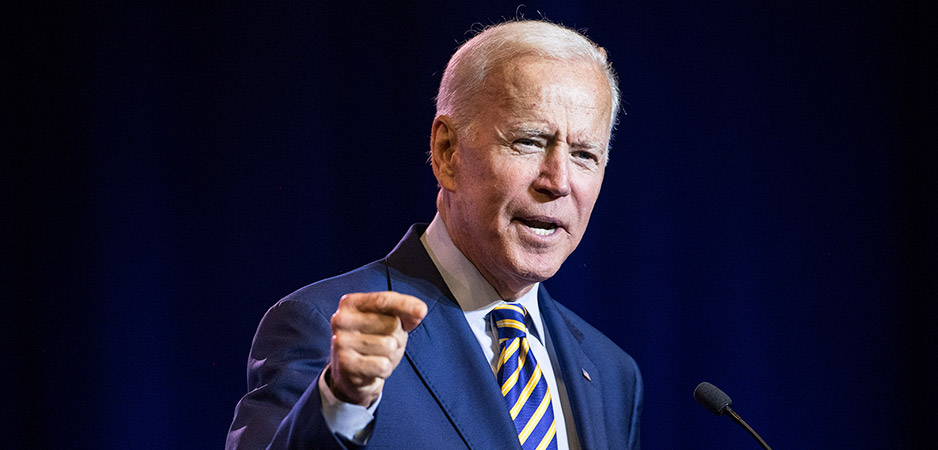
US politics has certain steadfast traditions. Evaluating a new president 100 days into their job is one of them, a custom that began when Franklin D. Roosevelt took the helm as the 32nd president in 1933. Many a time, these evaluations tend to pit the new president’s performance against their previous contemporaries. Fortunately for Joe Biden, the bar that Donald Trump had set was so low that it would have been impossible to not best it, even with a mediocre performance.
Secretary of State Antony Blinken has made one thing clear about the Trump administration’s approach to US foreign policy: It’s going to change. In his first month on the job, Secretary Blinken rescinded former President Donald Trump’s designation of the Houthis as a terrorist group, reaffirmed America’s strategic partnerships and announced plans to rejoin the UN Human Rights Council.
Horia Sima, a central figure within the interwar Romanian fascist organization the Iron Guard, once described his leader, Corneliu Codreanu, as follows:

Something radical happened in the 18th century. A motley band of Europeans that had begun to develop a bustling civilization along a stretch of the North American Atlantic coast decided that their way of thinking and doing business no longer needed to reflect European habits and modes of reasoning. At the same time, they claimed the honor of representing the most advanced version of human accomplishment, an idea Europeans had been promoting to the rest of the world for more than two centuries. They considered it a scientific truth that justified their obsession with dictating to other parts of the world the organization of their economies.
From 1983 to 2009, Sri Lanka saw a bloody civil war between the majority Buddhist Sinhalese and the minority Tamils. The conflict led to invaluable losses both economically and politically. To this day, the deep socio-religious wounds have yet to heal on the island in South Asia.
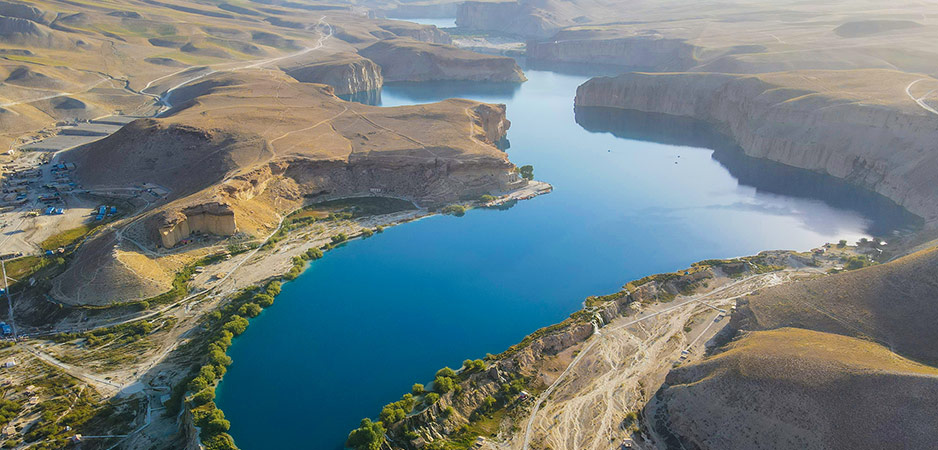
Everyone has a different doomsday scenario for Afghanistan once US and NATO troops withdraw by September 11. The Taliban will take over and reimpose their repressive social agenda. Al-Qaeda will multiply rapidly and again become a global threat. Rival warlords will split apart the country. Another wave of Afghan refugees will overwhelm Europe. And then there’s the scenario in which China basically takes over the country, or at least the most sought-after parts of the country: the resources that lie beneath Afghan soil.