

Donald Trump is gone, yet his specter continues to haunt American politics. The UK is no longer part of the European Union, yet Brexit continues to provoke emotions on both sides of the Channel. Both Trump’s victory in the 2016 presidential election and the outcome of the Brexit referendum of 2016 were driven by a range of widespread and profound emotions. One of the most prominent was nostalgia.
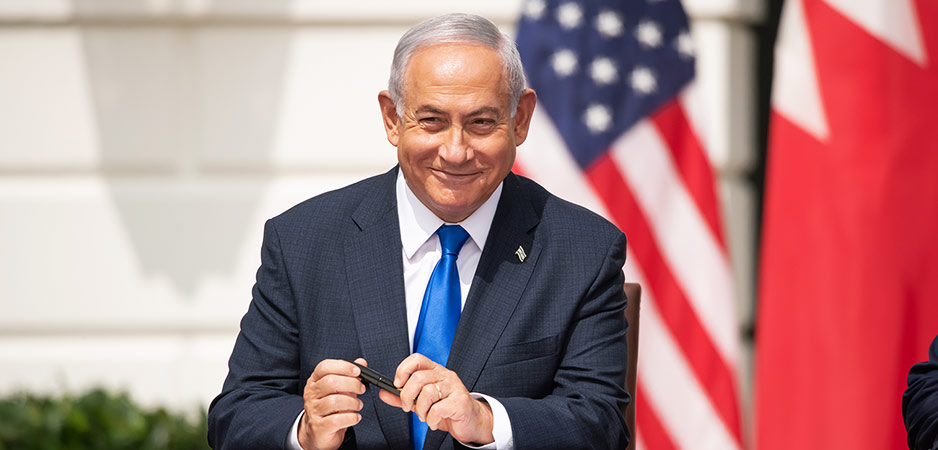
When Benjamin Netanyahu became prime minister for the second time in March 2009, it was not long after Israel had conducted three weeks of sustained air attacks on the enclave of Gaza. More than 1,100 Palestinians died in that campaign. About a dozen Israelis also perished, four from friendly fire, the rest from rockets coming from Gaza.

Projections, no matter how well-grounded in analytics, are a messy business. Three years ago, COVID-19 was unheard of and then-US President Donald Trump’s politics caused uncertainty in international relations, with democracy in retreat across the world. Despite the best-informed prognostications, predictions failed to capture cross-border variables such as immigration and civil conflict that have yet to play out in rearranging local and regional economic prospects.

The world Americans now live in has acquired all the trappings of a police state. But unlike police states of the past, with soldiers at every street corner, the police and their policing techniques have become invisible. Invisibility is the key to their efficacy. We mustn’t see what is ensuring our security.

Who wouldn’t reveal what is kept out of sight by those who do not have our best interests at heart? Although it is not only the far right that claims to be in the know about sinister plots, they certainly provide a steady stream of such revelations.

On May 6, The Daily Devil’s Dictionary dared to express surprise at the latest example of Russia-related fearmongering by the respectable corporate media. When Christopher Miller, who had recently risen to fame as acting defense secretary in the waning months of Donald Trump’s presidency, claimed to have unearthed an “act of war” attributable to Russia, the media jumped on the occasion. Miller was referring to the dormant “Havana Syndrome” dossier and accusing Russia of conducting direct-energy attacks against Americans in various places across the globe.

American media usually report on Israeli military assaults in the Occupied Palestinian Territories and Gaza as if the US is an innocent, neutral party to the conflict. In fact, a majority of Americans have told pollsters for decades that they want the United States to be neutral in the Israeli-Palestinian conflict.
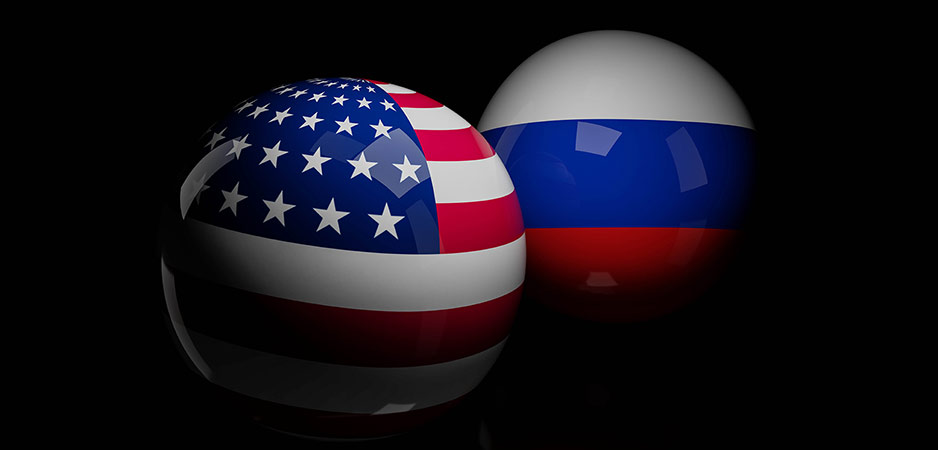
The Biden administration is posing some stark choices for its European allies. It is not only challenging them to stand more firmly against the Kremlin, but is expanding America’s expectations of what democracy should be inside their own countries. President Joe Biden’s tough position on Russia, especially the sanctions announced on April 15, risks further exacerbating the split within NATO countries over how tough to be on the Kremlin. The administration also risks blowback from Central and East European (CEE) states over its strong support for liberal democratic standards that not all of them endorse.

Earlier this week, an Israeli military official evoked “a worst-case scenario” conducted by three Israeli infantry brigades that would amount to crushing Gaza on the ground rather than just bombarding it. Some observers have noticed that the current worse-than-ever-before-but-not-as-bad-as-what’s-to-come scenario has miraculously permitted Benjamin Netanyahu, the Israeli prime minister, to hang on to power after the March 23 election deprived him of the hope of heading a new coalition.
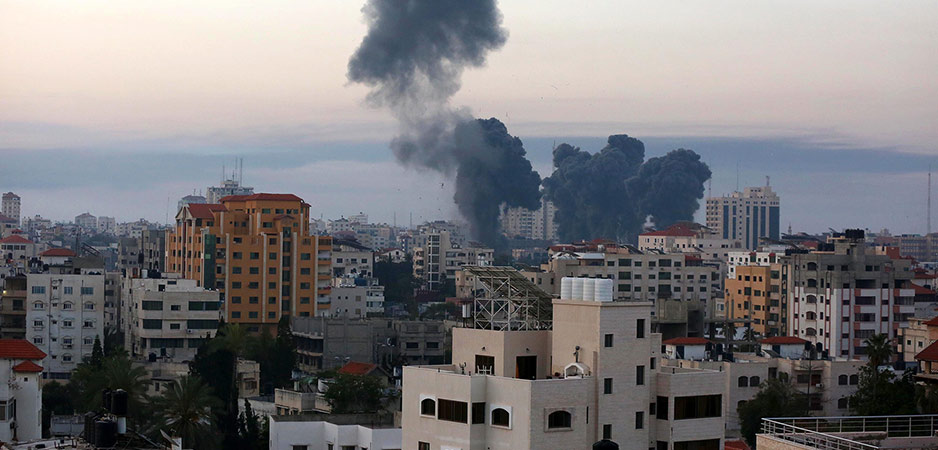
The deepening Israeli-Palestinian conflict is quickly becoming a game of identifying which acts committed by either side in the course of the most recent fighting are war crimes and which are crimes against humanity. The failure on the part of both international institutions and powerful nations to provide even a minimum of perspective that might lead toward a satisfying resolution has become manifest. In today’s geopolitical hyperreality, perspective has become a luxury that politicians are not even allowed to consider.