
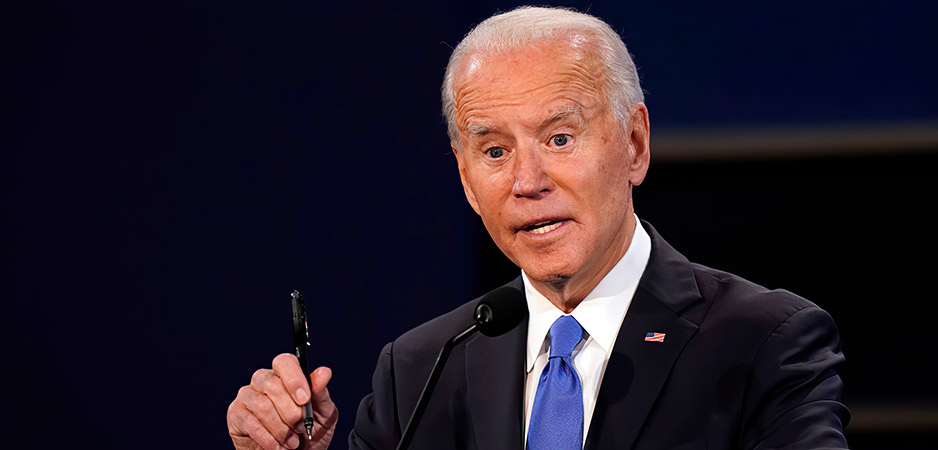
It has become so hard to be hopeful about America. Disappointment awaits around every corner and under every rock. Yet, there he is, Joe Biden, president of the United States of America, telling the nation that we can be so much better than we are and then having the guts to tell us what we need to do to get there. Other “leaders” have given it a try, but there was always one important thing missing. What makes Biden different than the others is having the political courage to tell the nation how we have failed to be what we have for so long told ourselves that we were and are.

It’s been a turbulent year for the fintech industry. The pandemic had its effect on the sector, just as it did on many others, in strange and contradictory ways. Experts are predicting that COVID-19 will drive more people into the fintech market while simultaneously slowing down the globalization process that the tech industry has relied on.

At the end of April, a conflict over water escalated into the most serious border clashes between Kyrgyzstan and Tajikistan since their independence from the Soviet Union. By May, 36 deaths had been reported on the Kyrgyz and 19 on the Tajik side, with more than 270 injured and dozens of homes destroyed.

A vast majority of the planet’s population had every reason to welcome the Biden administration’s belated backing of a proposed patent waiver for COVID-19 vaccines. To anyone not invested in the pharmaceutical industry or not named Bill Gates, it was a no-brainer. Economist David Adler and Dr. Mamka Anyona, writing for The Guardian, convincingly argue that “the system of pharmaceutical patents is a killing machine.”

Germany faces a major crisis. The German birth rate is considerably below what’s needed to replace the population. German seniors, meanwhile, are living longer and drawing more on state resources for their pensions and health care. There are basically two ways out of this demographic crisis.

During last year’s presidential election campaign, candidate Joe Biden promised “absolutely” and “positively” to support the waiver of US patents to permit the unencumbered manufacture of COVID-19 vaccines in the rest of the world. Once Biden was elected, the words “absolutely” and “positively” apparently lost some of their absoluteness and positivity, becoming synonyms of “possibly” and “hopefully.” The hesitation ended on Wednesday when the US committed to back the idea of a temporary patent waiver.

On February 5, the International Criminal Court (ICC) ruled that it has jurisdiction over the Palestinian territories occupied by Israel since 1967. Seven years after the 2014 Gaza conflict, in which war crimes were committed by both Israel and armed Palestinian groups according to the United Nations, ICC Prosecutor Fatou Bensouda confirmed a formal investigation into the situation in Palestine, which Human Rights Watch (HRW) has been calling for since 2016. On April 27, HRW released a 213-page report detailing Israel’s “crimes of apartheid and persecution.” An ICC investigation is a crucial step toward regional peace, which cannot be achieved without accountability and transitional justice.

As if the Biden administration was lacking in pretexts to start a new war with Russia, Donald Trump’s former Acting Defense Secretary Christopher Miller has stepped up to lead a campaign more reminiscent of a tale from the “Twilight Zone” than the USA’s strategic rivalry with the Soviet Union in the Cold War. In the space of a week, CNN has published two lengthy articles on the topic. Politico picked it up with this provocative headline: “‘It’s an act of war’: Trump’s acting Pentagon chief urges Biden to tackle directed-energy attacks.” Miller’s new casus belli has a name: a “directed-energy attack,” sometimes referred to as “the Havana syndrome.”

Since the United Nations Convention Against Corruption was adopted in October 2003, International Anti-Corruption Day is observed annually on December 9. In the context of the ongoing pandemic, António Guterres, the UN secretary general, had a clear message: “Corruption is criminal, immoral and the ultimate betrayal of public trust. It is even more damaging in times of crisis — as the world is experiencing now with the COVID-19 pandemic. The response to the virus is creating new opportunities to exploit weak oversight and inadequate transparency, diverting funds away from people in their hour of greatest need.”

The Guardian’s wealth correspondent, Rupert Neate, is an unrelenting fan of philanthropist Bill Gates. On April 11, he effusively praised the fact that “billionaires — including Microsoft founder Bill Gates and Twitter co-founder Jack Dorsey — have committed huge amounts of their money to fund solutions to the unfolding crisis.” He was presumably unaware of what Alexander Zaitchik documented in an in-depth article published the following day in The New Republic on the role Gates played as the master puppeteer of the world’s response to the pandemic.